

Writing 
Our writing curriculum is designed to provide a broad and balanced education that meets the needs of all children. In EYFS and Key Stage 1, children develop the foundations of writing through Read Write Inc., where they learn the essential skills of phonics, spelling, handwriting and sentence construction. As children progress through school, these foundations are developed further through the award-winning Ready Steady Write from Literacy Counts. Together, these approaches support children in becoming confident, independent and successful writers with high aspirations.
Our writing curriculum is research-informed and impact-proven, carefully designed to support all children to master the foundational skills and write for a clear audience and purpose. Through the use of high-quality, vocabulary-rich texts, we provide exciting and meaningful reasons to write. Children are immersed in literature and taught to craft their writing with precision, using a range of pedagogical approaches, including sentence accuracy, modelled writing and shared writing, as well as regular opportunities for editing. We value spoken language as a foundation for writing. Through structured talk, drama and vocabulary exploration, children learn how to organise and express their ideas clearly before writing them down. Our aim is for every child, regardless of need, to write fluently and take pride in their work. We want our pupils to leave primary school as enthusiastic writers, ready for the next stage of their education.
Intent
The writing curriculum is designed to provide a broad and balanced education that meets the needs of all children. It provides opportunities for children to develop as independent, confident and successful writers, with high aspirations, who know how to make a positive contribution to their community and wider society.
Our intent is for all pupils, irrespective of their needs, abilities or background, to learn to write fluently, developing their own writer's voice. We aim to meet, and where possible exceed, the expectations laid out in the Early Learning Goals and National Curriculum, with pupils progressing appropriately across school. We recognise that spoken language underpins the development of writing. The quality of language that pupils hear and speak is vital for developing their vocabulary and grammar and their understanding of writing.
We believe that children need to develop a secure knowledge base in literacy, which follows a clear pathway of progression as they advance through the primary curriculum. Through Read Write Inc. in EYFS and Key Stage 1, children develop secure phonic knowledge, spelling strategies, handwriting fluency and sentence construction skills. Through Ready Steady Write, children build upon these foundations to write effectively for a range of audiences and purposes using increasingly ambitious vocabulary, grammar and composition.
We cultivate a love of writing and communication through vocabulary-rich, high-quality literature. By inspiring and developing an appreciation of our rich and varied literary heritage and providing meaningful and exciting provocations to write, we develop a habit of writing widely and often. We recognise the importance of nurturing a culture where children take pride in their writing, can write clearly and accurately, and adapt their language and style for a range of contexts.
Implementation
In EYFS and Key Stage 1, children are taught through Read Write Inc. Phonics. Daily lessons provide a systematic approach to developing early writing through phonics, spelling, handwriting, vocabulary development and sentence construction. Children are taught to apply their phonic knowledge when writing and develop increasing fluency, accuracy and confidence in communicating their ideas. Oral rehearsal and spoken language form an important part of the programme, ensuring that children can articulate ideas before recording them in writing.
Ready Steady Write empowers teachers to provide high-quality teaching of writing through high-quality literature. These detailed units of work centre on engaging, vocabulary-rich texts, with a wealth of writing opportunities within and across the curriculum. They provide:
- Clear sequential Episodes of Learning
- Vocabulary learning and contextualised spelling, grammar and punctuation
- Wider reading for the wider curriculum
- Example Texts linked to writing outcomes
- A wealth of supporting resource
From EYFS to Year 6, our writing curriculum builds progressively on the skills taught through Read Write Inc. and Ready Steady Write. In Key Stage 1 and Key Stage 2, high-quality age-appropriate texts are used through Literacy Counts' Ready Steady Write units of learning to develop children's writing knowledge and skills.
We use each book to create opportunities to:
- develop grammar and punctuation knowledge and understanding to use and apply across the wider curriculum, through sentence accuracy sessions;
- explore the Writing structure and features of different genres, identifying the purpose and audience;
- plan and write an initial piece of Writing with a clear context and purpose before evaluating the effectiveness of Writing by editing and redrafting.
Building on this foundation, we teach literacy using a range of strategies which include:
- Group Discussion – Children discuss and interrogate new ideas in a small group or whole class setting. They listen to and value each other’s ideas whilst taking on board feedback so as to improve their own explanations.
- Partner Talk – Children work in partners to discuss their ideas. They are able to explain their ideas about texts they have read and prepare their ideas before they write.
- Questioning – Teachers use a range of questioning strategies to establish children’s current understanding and develop their learning.
- Modelled Writing – Teachers model Writing and editing to demonstrate the high expectations they have. They verbally ‘think aloud’ in order to make the Writing process explicit and provide a rich and varied vocabulary for the children to utilise in their own work. This happens daily, through sentence accuracy
- Shared Writing – Teachers use the ideas from the children to create shared pieces of Writing. This enables the children to see the Writing process in action as well as having pride and ownership over the finished piece.
- Editing – All children are signposted to regular opportunities for reviewing and editing their own and the work of others.
- Working walls – Teachers and children regularly update working walls to ensure learning is documented within a unit of work.
Class teachers ensure that the Writing process is clearly evident on working walls, with modelled examples being available to all pupils as the sequence of lessons develops.
Resources
In EYFS and Key Stage 1, classrooms are equipped with Read Write Inc. resources including Speed Sound Charts, phonics resources, handwriting materials and decodable texts to support the development of early writing skills.
Each Key Stage 2 class has a resource box with their Ready Steady Write vehicle texts, reveal objects and supplementary texts which support the themes and genre being taught for that half term. The lesson plans, resources and leadership support is found on the membership homepage online.
Working Walls and Table Resources
Each class is expected to develop a Literacy working wall which adapts daily with teaching. Displays should model the writing process and scaffolds needed for children to apply to their own writing. Spellings, handwriting and supporting phonics materials should also be displayed within the classroom to aid children’s writing. In EYFS and Key Stage 1, Read Write Inc. Speed Sounds, Red Words and handwriting prompts are displayed and regularly referred to during writing activities. Sentence accuracy checkers are available to all children, both in their books and in the environment. Staff will model the expectations throughout the curriculum.
Planning
Read Write Inc. provides a clear progression of early writing skills in EYFS and Key Stage 1 that are linked to the National Curriculum. Ready Steady Write provides the framework for developing composition, grammar and authorial craft through high-quality texts. The Ready Steady Write units also include all of the resources needed for each teacher to plan and deliver lessons. There are a range of scaffolds and supporting resources and teachers tweak and shape the units to meet the specific needs of their children.
Inclusion
Children with English as an additional language:
It is vital that children who have English as an additional language have English modelled accurately by all staff at school. Collaborative work with peers (where English is their first language) is essential and EAL children should be provided with consistent opportunities for this verbal interaction. All teachers include a range of strategies to support children with EAL which includes:
- Teacher and peer modelling and consistent use of visual support
- Repetition and recasting of language features
- Word banks and scaffolded speaking and listening activities
- Resources that include images to secure language understanding
- Use of technology to support interpretation of Example Texts
Teachers work with the SENDCO to best meet the needs of individuals within their classes. Children who are new to English are assessed and support is put in place by the SENDCO to help them make rapid progress.
Children with Special Educational Needs:
Some children experience learning difficulties, which affect their progress in English. Class teachers inform the SENDCO if they are concerned that a child may have underlying learning difficulties. Some children then receive SEN support. This may include:
- scaffolds and supports to develop writing ideas and language acquisition
- technology to support the generation of ideas, develop words banks and plan and write
- explicit instruction, including the modelling of sentences, paragraphs, planning and editing – with opportunities for the children to practice modelled techniques
- a focus on cognitive and metacognitive strategies to help children articulate their learning
- flexible groupings to ensure peer support and appropriate level of challenge
Confident and competent writers:
Children are given opportunities to deepen their knowledge in writing and to effectively draw upon their reading when constructing texts. writing groups and differentiation. Lesson plans for Ready Steady Write include appropriate challenge and these are considered when delivering lessons.
Impact
The innovative practice across the school provides a strong foundation and opportunities for children to collaborate and develop social skills both indoors and out. This curriculum design ensures that the needs of individual and small groups of children can be met within the environment of quality first teaching, supported by targeted, proven interventions where appropriate. In this way it can be seen to impact in a very positive way on children’s outcomes. High quality visits and visitors to the school enhance the curriculum and provide opportunities for Writing for a purpose. Children have opportunities to share their learning with each other, their parents and carers and other learners through school-based and external exhibitions, performances, competitions and events involving other schools. Developing their independence and motivation as learners and their sense of responsibility as future citizens is at the heart of all our teaching and learning. Children develop both the transcriptional skills needed to write accurately and the compositional skills needed to write effectively. Through Read Write Inc., they secure the foundations of writing; through Ready Steady Write, they learn to write with increasing purpose, precision and creativity. As a result, we have a community of enthusiastic writers who enjoy showcasing their developing literacy knowledge and skills. They are confident to take risks in their writing, and love to discuss and share their ideas.
rsw progression document ks2.pdf
Handwriting
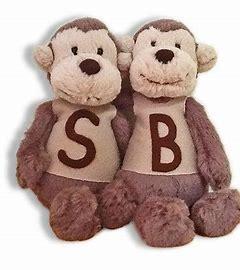 Our school handwriting scheme is called Kinetic Letters, the children learn how to form letters based on how they have been grouped into letter families. Each letter family is introduced to the children through a story about two monkeys called Bounce and Skip. Bounce is a brave monkey and helps write the tall letters whilst skip is a scared monkey and helps write the other letters.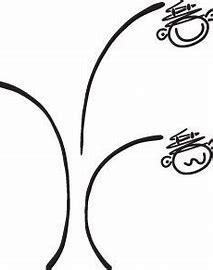
the letter family stories 300829535.pdf
Spellings 
Our spelling curriculum is designed to provide a broad and balanced education that meets the needs of all children. We follow the award-recognised Ready Steady Spell by Literacy Counts to ensure that all pupils become fluent, accurate spellers. Our spelling curriculum is research-informed and impact-proven, helping children secure the essential skills and strategies they need to spell confidently across the curriculum. Through engaging activities, consistent teaching routines and regular opportunities to revisit prior learning, we help children move spelling knowledge into their long-term memory. Our aim is to build confident writers who are equipped with the tools they need to communicate clearly and effectively. Spelling is taught in a clear and systematic way, with regular reviews and assessments. Additional support is provided through Ready Steady Spell: Go sessions, which offer targeted intervention for pupils who need further consolidation.
ks2 spellings progression overview.pdf